ہومیوپیتھک فزیشن کا واحد مشن یہ ہے کہ وہ شفا کے بلند ترین معیار کو حاصل کرے اور “شفا کا بلند ترین معیار” درج ذیل ہے
1. شفا تیز ترین ہو۔ وضاحت:کسی بیماری کی تیز ترین شفا کا دورانیہ بیماری کی نوعیت پر منحصرہوتا ہے۔ اگر بیماری ایکیوٹ ہو اورایک مخصوص اور معین مدت میں خود بہ خود ختم ہو جانے والی ہو، تو اسے اس کے اس مخصوص کورس سے پہلے ٹھیک کر دینا چاہیے ۔ دوسرے الفاظ میں، شدید کیسز کو فوری طور پر ختم کرنا چاہیے۔ لیکن کرانک (دائمی) بیماریوں کو علاج کے لیے نسبتاً زیادہ وقت درکار ہوتا ہے کیونکہ ان بیماریوں نے مریض کے ٹشوز میں تبدیلیاں پیدا کردی ہوتی ہیں۔
2. نرمی کے ساتھ ہو اور مزید نقصان دہ نہ ہو۔ وضاحت: علاج اس طریقے سے کیا جائے کہ مریض کی موجودہ تکلیف میں اضافہ نہیں ہونا چاہیے، اس لیے اسے نرم ہونا چاہیے۔ ہمیں مریض کو مزید نقصان پہنچانے کا کوئی حق نہیں۔ ڈاکٹر ہانیمن کے دور میں علاج کے لئے خون بہانے، جلاب دینے، کٹ لگانے اور آگ سے داغنے جیسے طریقے اپنائے جاتے تھے، جو بیماری سے زیادہ نقصان دہ تھے۔ اس لئے تکلیف دہ طریقوں سے بھی بچنا ہے۔
3. مستقل طور پر ہو۔ وضاحت:اس کا مطلب ہے کہ بیماری کے دوبارہ ہونے کا کوئی امکان نہ ہو۔ علاج کے بعد صحت یابی مستقل ہونی چاہیے۔ محض علامات کو دور کرنا یا مریض کی تکالیف اور علامات کو دبادینا حقیقی معنوں میں صحت یابی نہیں کہلاتا۔ لہذا اصل مشن شفا حاصل کرنا ہے۔
4. کم سے کم وقت میں ہو۔ وضاحت:یہ ایک نسبتی اصطلاح (Relative term )ہے ، ایسا اس وقت ممکن ہوتا ہے جب زیادہ سے زیادہ بالمثل میڈیسن کاانتخاب کیا گیاہو۔ جب کوئی دوا علامات کے مجموعے کی زیادہ سے زیادہ مماثلت کی بنیاد پر دی جاتی ہے ،تو توقع کی جاتی ہے کہ مریض جلد صحت یاب ہو جائے گا۔ علاج کے انتخاب کا یہ سیدھا سا طریقہ وقت کی بچت کرتا ہے اور قابل اعتماد بھی ہوتا ہے۔
5. بیماری کا وجود مکمل طور پر ختم کردیا گیا ہو۔ وضاحت:ایک بیماری جس کی بہت سی علامات ہوتی ہیں۔ کچھ علامات زیادہ پریشان کن اور تکلیف دہ ہوتی ہیں اور کچھ کم پریشان کن ہوتی ہیں۔ اس لیے ہمیں محض زیادہ پریشان کن علامات کو دور کرنے پر ہی مطمئن نہیں ہونا چاہیے ،کیونکہ ہر علامت نارمل صحت کی حالت سے انحراف کو ظاہر کرتی ہے۔ بیماری کو مکمل طور پر اس کی تمام علامات سمیت ختم کرنا ضروری ہے۔ لہذا نارمل صحت کی حالت کوبحال کرنے کے لیے ہر علامت کو دور کرنا ضروری ہے تاکہ شفا کا بلندترین معیار حاصل کیا جاسکے۔
6. نہایت قابل اعتماد اور بہت بے ضرر طریقے سے حاصل ہو۔ وضاحت:جب کسی بیماری کی علامات “ہیرنگ کے قانون” کے مطابق ختم ہو رہی ہوتی ہیں، تو ہم یقین کر سکتے ہیں کہ بیماری بالآخر صحت یاب ہو جائے گی۔ اس قانون کے مطابق ،علامات اوپر سے نیچے، اندر سے باہر، مرکز سے کنارے، زیادہ اہم سے کم اہم عضو تک، اور ان کے آنے کے الٹ ترتیب میں ختم ہوتی ہیں، یعنی جو علامات آخر میں آئیں وہ پہلے ختم ہوتی ہیں۔
7. علاج شفاف، سیدھے سادے اور آسانی سے سمجھ میں آجانے والے اصولوں کے مطابق ہو۔
والسلام ہومیوپیتھک ڈاکٹر رفعت نواب مصعب فیصل آباد 0321-6693815
ایک ہومیوپیتھک فزیشن کا سب سے اعلیٰ اور واحد مشن “بیمار” کی صحت کو بحال کرنا ہے، یعنی اسے شفا کی جانب لانا ہے۔جیسا کہ اس کی وضاحت آئندہ بیان کی جائے گی۔
نوٹ: شفا سے مراد وہ حالت ہوتی ہے جو بیمار ہونے سے پہلے تھی، جس حالت پر اس کو اللہ نے پیدا کیا تھا۔
Homeopathic medicine is a natural and holistic approach to healing the body. Read on to learn more about what it is and how it works.
Introduction:
Homeopathic medicine has been around for more than two centuries and is a popular alternative approach to traditional medicine. The concept behind homeopathy is to treat the whole person, not just the symptoms of their illness. Homeopathy uses natural substances in highly diluted amounts to stimulate the body’s healing abilities. In this article, we will explore the basics of homeopathic medicine and how it works.
What is Homeopathic Medicine?
Homeopathic medicine is a form of alternative medicine that was developed in the late 18th century by a German physician named Samuel Hahnemann. It is based on the principle of “like cures like,” meaning that a substance that causes symptoms in a healthy person can be used to treat similar symptoms in a sick person.
Homeopathic medicines are made from natural substances, such as plants, minerals, and animal products, that are highly diluted in water or alcohol. The dilution process is believed to increase the effectiveness of the substance while reducing the risk of side effects.
How Does Homeopathic Medicine Work?
Homeopathic medicine works by stimulating the body’s natural healing abilities. The highly diluted substances used in homeopathy are thought to trigger a response in the body that helps it fight off the illness or condition.
Homeopathic remedies come in many different forms, including tablets, pellets, and liquid drops. The appropriate remedy is chosen based on the individual’s symptoms and overall health. Homeopathic practitioners take a holistic approach to treatment, considering the person’s mental, emotional, and physical health when selecting a remedy.
Homeopathic remedies are generally safe and have few side effects. However, it is important to note that homeopathy should not be used as a substitute for traditional medical care in cases of serious illness or injury.
How is Homeopathic Medicine Different from Traditional Medicine?
Homeopathic medicine differs from traditional medicine in several ways:
Homeopathy treats the whole person, not just the symptoms of their illness.
Homeopathy uses natural substances in highly diluted amounts, while traditional medicine often uses synthetic drugs.
Homeopathy focuses on stimulating the body’s natural healing abilities, while traditional medicine often relies on drugs to suppress symptoms.
Common Homeopathic Remedies
There are hundreds of homeopathic remedies available, each with its own specific uses and indications. Some of the most common remedies include:
Arnica montana: used for bruises, sprains, and muscle soreness.
Belladonna: used for fever, inflammation, and headaches.
Chamomilla: used for teething pain and irritability in infants and young children.
Ignatia: used for grief, anxiety, and emotional stress.
Nux vomica: used for digestive issues and hangovers.
Frequently Asked Questions:
Q: Is homeopathic medicine safe? A: Homeopathic remedies are generally safe and have few side effects. However, it is important to consult with a qualified homeopathic practitioner before beginning treatment.
Q: Can homeopathic medicine be used in conjunction with traditional medicine? A: Yes, homeopathic medicine can be used alongside traditional medical treatments. However, it is important to inform your doctor of any homeopathic remedies you are taking.
Q: How long does it take for homeopathic remedies to work? A: The length of time it takes for homeopathic remedies to work varies depending on the individual and the condition being treated. Some people may experience relief within minutes, while others may require longer treatment periods.
Conclusion:
Homeopathic medicine is a natural and holistic approach to healing that has been around for more than two centuries. It uses highly diluted natural substances to stimulate the body’s natural healing abilities and treat the whole
person, not just the symptoms of their illness. While homeopathy is not a substitute for traditional medical care in cases of serious illness or injury, it can be a valuable complementary approach to promoting overall health and wellness.
If you are interested in exploring homeopathic medicine, it is important to seek out a qualified practitioner who can guide you in selecting the appropriate remedies and dosage. As with any form of medical treatment, it is important to inform your doctor of any homeopathic remedies you are taking.
In summary, homeopathic medicine is a natural and holistic approach to healing that uses highly diluted natural substances to stimulate the body’s natural healing abilities. While it is not a substitute for traditional medical care, it can be a valuable complementary approach to promoting overall health and wellness.
– The seeds of Ignatia contain a large proportion of strychnine than those of Nux-vomica, yet there is a great difference between the characteristic features of the two drugs.
– Though it affects the MIND, EMOTIONAL element is profoundly influenced and co-ordination of functions is interfered with; causing ERRATIC; contradictory; parodoxical mental and physical EFFECTS; which change rapidly, and are opposite to each other.
– NERVOUS SYSTEM is affected causing SPASMODIC EFFECTS; often violent with rigidity, twitching and tremors.
– It is adapted to the persons of nervous temperament esp. women of sensitive, easily excited nature,mild disposition, quick to perceive and rapid in execution.
– SENSE OF LUMP, foreign body or sharp pressure.
– Jerks run through the whole body.
– Tendency to start.
– Globus.
– Clavus.
– Hysteria.
– Chorea; after fright, from grief agg. after eating, amel. lying on back.
– Convulsions of children; during dentition; after punishment; after fear or fright; return at the same hour daily.
– Spasms, with cries or involuntary laughter.
– Tonic spasms of single parts, with frothing at the mouth.
– Spasms alternating with oppressed breathing.
– Pain in spot agg. close attention amel.
– Oversensitive to pain.
– Pains change their locality, come gradually, abate suddenly, or come and go suddenly.
– Symptoms pass after profuse urination.
– Plague; preventive and curative.
– Nervous shuddering; with pain.
– Paralysis; after great mental emotions and night watching, in sick chamber.
– Suitable to persons who had been starving either from want or other causes.
– Ill effects of grief, fright, worry, disappointed love; jealousy; old spinal injuries.
– Catalepsy with opisthotonous. (Nat-mur. should follow in chronic conditions.)
Worse
– EMOTIONS.
– GRIEF.
– Chagrin.
– WORRY.
– Fright; shock, after losing persons or objects that were very dear.
– Air; open, cold.
– Odours.
– Touch.
– Coffee.
– Tobacco.
– Yawning.
– Stooping,walking; standing.
– At the same hour and day.
Better
– Change of position.
– Lying on affected part.
– Urination.
– If alone.
– Pressure.
– Deep breathing.
– Swallowing.
– Eating
– Near a warm stove.
– Sour things.
Mind
– ALERT; OVERSENSITIVE AND NERVOUS.
– Highly emotional.
– Moody.
– Brooding GRIEF.
– Silent and sad.
– SIGHS.
– Weeps or laughs by turns, laughs when she ought to be serious.
– Changeable moods.
– Unhappy love.
– Inward weeping; enjoys being sad.
– Angry with himself.
– Desire to be alone.
– Everything irks her.
– Intolerant of contradiction; of reprimands.
– Anguish; shrieks for help.
– Capricious.
– Delicately conscientious.
– Fear; of thieves; of trifles, of things coming near him Introspective.
– Faint easily, girls who faint every time they go to church; or who fall in love with married men.
– Sensation as if she had been fasting for a long time.
– Hurried during menses; no one can do things fast enough for her.
– Looks about the bed as if to find something.
– Delights to bring on her fits and produce a scare or a scene.
– Thinks she had neglected her duty.
– Sighing and sobbing.
– Not communicative.
– Fear or robbers at night.
Head
– Ache as if a nail were driven out through the sides; end in yawning and vomiting; alternate with backache.
– Headache agg. or amel. by stooping.
– Throws head backwards; from weight at occiput; or during spasms.
– Vertigo, with sparks before the eyes.
– Loud talking agg. headache.
– Headache; from abuse of snuff, tobacco smoke, coffee, from close attention.
Eyes
– Asthenopia; with spasms of the lids, and neuralgic pains around the eyes.
– Flashes of light, from violent coughing.
– Eyelids seem dry.
– Flickering, zigzags before the eyes.
Ears
– Roaring amel. by music.
– One ear red and hot.
– Deafness, except for human voice.
Nose
– Sensitive to inspired air.
– Pain over the root of the nose.
– Sneezing attacks.
– Cold, with hot knees.
Face
– Twitching of the muscles of face and lips.
– Redness and heat of one cheek; red and pale alternately.
– Masseters stiff and hard.
– Emotional trismus.
– Change colour often when at rest.
– Facial muscles distort on attempting to speak.
Mouth
– Spasmodic closing of the jaws; bites inside cheek or tongue when talking or chewing.
– Corners twitch.
– Taste sour.
– Toothache agg. after drinking coffee and smoking.
– Sudden attacks of salivation.
Throat
– Inflammed, hard swollen tonsils, with small ulcers on them.
– Follicular tonsillitis.
– Feeling as of a lump, when not swallowing or that can not be swallowed;amel. eating solids.
– Tendency to choke – Globus hystericus.
– Stitches extend to ear; between acts of swallowing.
– Submaxillary glands painful when moving the neck.
– Cramps in gullet.
– Goitre.
Stomach
– Hunger, with nausea.
– Craves raw or indigestible things; sour things, bread esp. rye bread.
– Appetite for various things, but when offered appetite fails.
– Aversion to warm food, meat, alcohol, tobacco.
– Empty sinking or spasmodic ache in stomach not amel. by eating; amel. by taking and deep breath.
– Hiccough; with eructations empty or bitter; after eating, drinking, smoking.
– Nausea or vomiting amel. indigestible things.
Abdomen
– Colicky griping pain in one or both sides of the abdomen.
– Stools – painful, difficult although soft.
– Constrictive sore pain in the rectum, like from blind haemorrhoids, remains one or two hours after stools.
– Obstipation of neurasthenics.
– Pain shoots up in rectum.
– Piles amel. sitting; agg. coughing.
– Prolapsus of rectum; from moderate straining at stools.
– Pressure as of a sharp instrument from within outwards.
– Painless contractions of anus.
– Haemorrhage and pain agg. when stool is loose.
– Constipation; from taking cold; from riding in a carriage; urging to stool with erection.
Urinary
– Frequent, profuse, watery urine.
– Urging to urinate, with inability to pass urine.
Male
– Erection during stool.
– Sweat on scrotum.
– Penis; contracted, becomes small.
Female
– Menses; irregular; black, too early, too profuse, or scanty; suppressed from grief.
– Chronic leucorrhoea, with sexual desire.
– Sexual frigidity.
Heart
– Palpitation, during menses.
– Anxious feeling in the region.
Respiratory
– TAKES DEEP BREATH; for relief.
– Choking; spasms of glottis.
– Dry, hacking spasmodic cough in quick successive shocks; shutting of the breath; cough; as from dust or sulphur fumes.
– Coughing increases the desire to cough.
– Cough, everytime he stands still during a walk.
– Constriction of the chest, feels as if too small.
– Whispering voice, can not speak loudly.
– Sleepy after coughing.
– Stitches in nipples on deep inspiration.
Neck and back
– Stiffness of the nape of the neck.
– Convulsive bending backwards of the back.
Extremities
– Jerking in limbs.
– Warm sweat on the palms.
– Cramps in calves.
– Heavy feet.
– Dislocative pain in joints.
– Knees are involuntarily drawn upwards, when walking.
– Trembling of hands when writing in anyone’s presence.
– Burning in heels on placing them near one another, when they come in contact they are cold to touch; agg. at night.
– Sciatica agg. in winter; amel. in summer.
– Corns painful as if sore.
– Knees hot with cold nose.
– As if flesh was loose on bones from a blow.
Skin
– Painful amel. pressure.
– Nettle rash over the whole body with violent itching (during fever).
Sleep
– Violent spasmodic yawning, with running from eyes.
– Sleep light; every sound wakes.
– Jerking of limbs on going to sleep.
– Somnambulism from wounded honour.
– Dreams; same horrid dreams over the over again.
– Child awakes from sleep with piercing cries and trembles all over.
– Hiccough, chewing motions of mouth in sleep. (children).
Fever
– Chill with red face.
– Shaking chill with thirst.
– Sweat agg. on eating; often on a small spot on the face.
– Heat, with aversion to uncover but no thirst.
– Chill, during pains.
– Feeling as if sweat would break out, but does not.
Obesity is a growing public health concern, affecting millions of people worldwide. It occurs when a person has an excessive amount of body fat, which can lead to a variety of health problems, including sexual health issues. In this article, we will discuss the relationship between obesity and sexual health issues.
Obesity and Sexual Function in Men:
Obesity can have a negative impact on sexual function in men. One study found that men with a body mass index (BMI) of 30 or higher were more likely to experience erectile dysfunction (ED) than men with a lower BMI. ED is a condition in which a man has difficulty achieving or maintaining an erection. Obesity can lead to ED by causing damage to blood vessels and nerves, which are important for erectile function.
Obesity can also lead to a decrease in testosterone levels in men. Testosterone is a hormone that plays a key role in sexual function, and low levels of testosterone can lead to a decrease in libido (sexual desire) and erectile function.
Obesity and Sexual Function in Women:
Obesity can also have a negative impact on sexual function in women. One study found that women with a BMI of 30 or higher were more likely to experience sexual dysfunction than women with a lower BMI. Sexual dysfunction in women can include a decrease in libido, difficulty achieving orgasm, and pain during intercourse.
Obesity can lead to sexual dysfunction in women by causing hormonal imbalances. Excess body fat can lead to an increase in estrogen levels, which can disrupt the balance of hormones that are important for sexual function.
Obesity and Infertility:
Obesity can also lead to fertility issues in both men and women. In men, obesity can lead to a decrease in testosterone levels, which can lead to a decrease in sperm production and quality. In women, obesity can lead to hormonal imbalances, which can disrupt the menstrual cycle and make it more difficult to conceive.
Obesity and Sexually Transmitted Infections (STIs):
Obesity can also increase the risk of contracting sexually transmitted infections (STIs). One study found that women with a BMI of 30 or higher were more likely to have an STI than women with a lower BMI. This may be due to the fact that obesity can weaken the immune system, making it more difficult for the body to fight off infections.
Obesity and Body Image:
Obesity can also have a negative impact on body image, which can lead to sexual health issues. People who are overweight or obese may feel self-conscious about their bodies, which can lead to a decrease in sexual desire and satisfaction.
In conclusion, obesity can have a significant impact on sexual health. Obesity can lead to sexual dysfunction, fertility issues, an increased risk of STIs, and body image issues. If you are concerned about your weight and its impact on your sexual health, it is important to speak with your healthcare provider to discuss your options for weight management and to develop a plan to maintain a healthy weight.
The modern era has brought significant advancements in technology, medicine, and other areas. However, it has also brought a host of new health challenges, which are often referred to as diseases of the modern era. These diseases are typically characterized by chronic conditions that can have a significant impact on a person’s quality of life. In this article, we will discuss some of the most common diseases of the modern era and how to control them.
Obesity:
Obesity is a condition characterized by excessive body fat, which can have a significant impact on a person’s health. It is a major risk factor for a variety of health conditions, including type 2 diabetes, heart disease, and certain types of cancer. To control obesity, it is important to maintain a healthy diet, engage in regular physical activity, and maintain a healthy weight.
Diabetes:
Diabetes is a chronic condition that occurs when the body cannot produce or use insulin effectively, leading to high blood sugar levels. There are two main types of diabetes: type 1 and type 2. Type 2 diabetes is the most common form and is typically associated with obesity and a sedentary lifestyle. To control diabetes, it is important to maintain a healthy diet, engage in regular physical activity, and monitor blood sugar levels.
Cardiovascular Disease:
Cardiovascular disease is a term that refers to a range of conditions that affect the heart and blood vessels. These conditions include high blood pressure, coronary artery disease, and stroke. To control cardiovascular disease, it is important to maintain a healthy diet, engage in regular physical activity, and manage risk factors such as high blood pressure and high cholesterol.
Mental Health Disorders:
Mental health disorders, such as depression and anxiety, are becoming increasingly common in the modern era. These conditions can have a significant impact on a person’s quality of life and can also increase the risk of other health problems. To control mental health disorders, it is important to seek professional help, engage in regular exercise, and practice stress-reducing techniques such as meditation and mindfulness.
Cancer:
Cancer is a condition characterized by the growth and spread of abnormal cells in the body. It is a leading cause of death worldwide, and the incidence of cancer is increasing in the modern era. To control cancer, it is important to engage in healthy behaviors such as not smoking, maintaining a healthy weight, and limiting alcohol consumption. Regular cancer screenings can also help detect cancer early when it is most treatable.
Conclusion:
The diseases of the modern era are a significant health challenge that requires a comprehensive approach to control. Maintaining a healthy diet, engaging in regular physical activity, managing risk factors such as high blood pressure and high cholesterol, seeking professional help for mental health disorders, and practicing healthy behaviors such as not smoking and limiting alcohol consumption are all important steps to control these diseases. By taking these steps, we can reduce the burden of these diseases and improve our overall health and well-being.
Homeopathy is a medical science and art developed over 200 years ago by Samuel Hahnemann, a brilliant physician and medical translator in Germany. It quickly became the medicine of choice among many Europeans. Homeopathy gained great fame due to its success during epidemics, and, by 1900, it was practiced by one in five medical doctors in the U.S.
Over the past thirty years, homeopathy has enjoyed a boom in popularity and interest in the U.S., India, Pakistan, Europe, Australia, New Zealand, and many other places throughout the world. According to the World Health Organization, homeopathy is the second-largest and fastest-growing medicine in the world. In India alone, 100 million people use it exclusively to stay healthy. Up to 70% of French doctors consider homeopathy effective, and at least 25,000 prescribe it to their patients. A 2011 report by the government of Switzerland, a bastion of pharmaceutical headquarters, concluded that homeopathic medicine was both effective and cost-effective, and recommended that it be covered by their national health insurance (according to a February 2012 article in the Huffington Post by Dana Ullman, M.P.H.).
Homoeopathy is a system of medicine founded by the celebrated physician Dr. Samuel Hahnemann (1755-1843) of Germany. It is based on the principle that ‘like cures like’. In practice, this means that a medicine capable of producing certain effects when taken by a healthy human being is capable of curing any illness that displays similar effects.
The medicines of Homoeopathy
Like Cure Likes
For example, if a healthy person takes a dose of Arsenic, he will develop vomiting, diarrhea of rice-water stools, a rapid pulse, and prostration. His skin will become cold and his expression anxious. In smaller doses or when taken for a longer time, he will develop a running nose, heavy head, cough, and bronchial catarrh. Even later there will be specific disturbances of skin and nerves. He will develop a burning sensation all over which is relieved by warmth, frequent thirst for sips of water, fear of death, restlessness, and a worsening of symptoms at noon and midnight.
According to Homoeopathic law ‘like cures like’, countless patients displaying such symptoms have been cured by the homeopathic remedy Arsenicum album, irrespective of the name of the disease (cholera, colds, eczema, asthma, etc.).
Hippocrates postulated this principle in the words, “Similia Similibus Curentur” (‘likes are cured by likes).
The practice of homeopathy is based on certain fundamental principles. Firstly, the remedies that are used are tested on human volunteers (provers) to elicit the symptoms they can produce. The symptoms of each remedy experienced by the provers are recorded in exact detail and they form the Homoeopathic Materia Medica. The symptoms of the patient are then matched with the symptoms of the various remedies in the Materia Medica to find out a single remedy whose symptoms are most similar to those of the patient (like cures like).
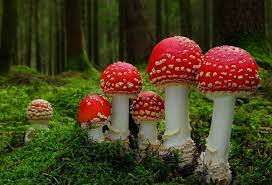
– This poisonous mushroom, acts on Cerebro-spnal axis.
– Its action on brain produces more vertigo and delirium.
– Affection of spinal cord, nerves and medulla, produces irregular, UNGULR, UNCERTAIN and exaggerated MOTIONS; patient reaches too far, staggers or steps too high, drops things etc.
– Symptoms appear slowly.
– Patient suffers from MANY and DIVERSE symptoms.
– TREMBLLING; TWITCHING; JERKINGS or fibrillar spasms here and there are very marked, EYELIDS and tongue are specially affected, Symptoms appear diagonally as right arm and left leg.
– Shuddering.
– Nervousness and restlessness.
– Chorea amel. during sleep.
– Sensation as if pierced by cold needles, or hot needles, a cold drop or cold weight on the parts.
– Painful twitching, then the parts become stiff and cold.
– In epilepsy and convulsions physical strength is increased, can left heavy loads.
– Twitching cease during sleep.
– Convulsions after coition; from suppressed milk; after being scolded; or punished.
– Young nervous hysterical married women who faint after coition.
– Children walk and talk late on account of brain complaints.
– Yawning before complaints.
Worse
– COLD air.
– FREEZING air.
– Before thunderstorms.
– Mental exhaustion.
– Coition.
– Debauchery.
– Alcohol.
– Pressure on spine.
– Touch.
– Morning.
– During menses.
– Sun.
– Fright.
Better
– Gentle motion.
Mind
– Sings, talks incoherently, changes rapidly from subject to subject but does not answer.
– Loquacity.
– Indisposed to perform any kind of work especially mental.
– Fearlessness.
– Makes verses.
– Hilarious.
– Embraces and kisses hands.
– Selfish.
– Indifferent.
– Dull and dizzy as if drunk.
– Morose, self willed, stubborn; slow in learning to walk and talk.
– Awkward, clumsy.
– Knows no one; throws things.
– Pressure on spine causes involuntary laughter.
– Can not do anything new, can not do his routine work or does the opposite.
Head
– Vertigo; from sunlight.
– Dull headache; must move the head to and fro.
– Headache amel. after stool or urine; headache with nose-bleed or thick mucus discharge.
– Pain as from nail in right side of head.
– Head is in constant motion.
– Head drawn towards shoulders.
Eyes
– Reading difficult, as type seems to move, to swim.
– Double vision, oscillating eyeballs.
– Gum in canthi.
– Muscae volitantes; brown.
– Twitching of eyelids.
– Narrowing of space between eyelids.
– Nystagmus; squint.
– Eyelids thick, dry, burning.
Ears
– Itching in the ears with redness and burning pain, as if they had been froze.
– Twitching of the muscles about the ears.
– Noises.
Nose
– Frequent sneezing, without coryza.
– Flow of clear water, without coryza.
– Sneezing, after coughing.
– Itches internally and externally.
– Foetid dark bloody discharge.
– Epistaxis; in old people.
– Redness of.
– Obstruction on stooping.
Face
– Facial muscles, feel stiff; twitch.
– Face, itches and burns.
– Pain in the cheeks, as of from splinters.
– Neuralgia, as if cold needles run through nerves.
– Grimaces.
– Idiotic expression.
– Face, blue and puffed.
Mouth
– Angles of mouth droop; from paralysis; saliva runs out.
– Herpes on lips.
– Taste; sweet, bitter.
– Aphthae on the roof of the mouth.
– Tongue; dry, tremulous; one side numb, with vertigo.
– Indistinct, jerky speeph.
– Offensive breath.
– Froth at mouth.
– Swelling and bleeding gums, with pain.
Throat
– Feels contracted.
– Small solid balls of phlegm thrown up, without coughing.
– Dryness with difficulty in swallowing.
– Scratching on every attempt to sing.
Stomach
– Always thirsty.
– Eructation; empty, tasting of apples; or of rotten eggs.
– Eructations, alternating with hiccough.
– As of a lump in epigastrium.
– Gastric disturbances, with sharp pain in liver region.
– Vomiting; bitter, with prostration, with stitches in rectum and groins.
Abdomen
– Rumbling and fermenting in bowels.
– Profuse inodorous flatus.
– Diarrhoea, with much foetid garlicky odour flatus.
– Diarrhoea, of children, with grass green bilious stools.
– On the other hand there is profound prostration and stupor, and lack of reaction, even speechless.
– Mind and body becomes weak.
– It is specially useful in children during dentition and summer complaints when anguish, crying and expression of uneasiness, and discontent are present.
– As the disease progresses the patient becomes more and more retired in his disposition, and more inclined to weep.
– In epileptiform spasms, the thumbs are clenched, face becomes red, eyes turned downwards, pupils dilate and staring, foam at mouth.
– Patient can not stand, sit up or hold the head up.
– Weak nervous and prostrated from overwork.
– Dotage.
– Lancinating pains.
– Parts feel screwed together.
– Improperly fed babies.
– Children who lack the power to hold their heads up, with no particular ailment, sometimes they can’t even stand or bear any weight on their limbs.
Worse
– 3 to 4 a.m. and evening.
– Warmth; hot weather.
– Milk.
– Detention.
– Frequent eating.
– Over-exertion.
Better
– Open air, by walking in open air.
– Conversation.
Mind
– Inability to think or fix attention, from overstudy.
– Delirium, sees cats, dogs and rats etc.
– Idiocy, alternate with furor.
– Wants to jump out of bed or out of window.
– Examination funk from simple sense of incapacity.
– Idiotic children.
– Awkward.
Head
– distressing pains in the occiput down nape of neck and spine amel. lying down and pressure.
– Head symptoms are amel. by passing flatus and by stool.
– Hair feels pulled.
– Vertigo; with sleepiness, with palpitation, with weakness.
– Can not raise head.
– Head hot after vertigo.
– Squeezing headache, with vertigo agg. walking and looking upward.
– Dizzy and drowsy.
Eyes
– Photophobia (chronic).
– Eyes brilliant and protruding.
– Eyes drawn downwards.
– Cornea sunken.
– Objects seem larger or double.
– Swelling of meibomian glands.
– Rolling of eyes on falling asleep.
Ears
– As if something hot streaming out.
– Feels obstructed; amel. by inserting the fingers and drawing the parts apart.
Nose
– Herpetic eruptions on tip of nose.
– Frequent ineffectual desire to sneeze.
– Alae nasi drawn in.
Face
– Sunken; pale, puffed, spotted, red.
– Linea nasalis marked.
– Blue white pallor about the lits.
– Deathly aspect.
– Chin and corners of mouth feel cold.
Mouth
– Tongue seems too long.
– Aphthae in the mouth.
– Speech slow embarrassed.
– Speechless.
– Taste bitter; of onions; of cheese; sweetish in morning.
Stomach
– Nibbling appetite.
– Intolerance of milk.
– Violent sudden vomiting of milk as soon as swallowed or Inlarge curds.
– Hungry after vomiting.
– LIMPNESS AND DEEP SLEEP AFTER VOMITING.
– DEATHLY NAUSEA.
– Regurgitation of food long after eating.
– Vomiting of frothy matter white as milk; or yellow fluid.
– Stomach feels tuned upside down.
– Digestion affected from brain exhaustion.
– Retching.
Abdomen
– Black bluish swelling of abdomen, coldness of abdomen, subjective and objective, with coldness of legs, with aching in bowels amel. warm application.
– Colic, followed by vomiting, vertigo and weakness.
– Bubbling sensation around navel.
Stools
– Yellow green slimy diarrhoea.
– Stools undigested.
– Obstinate constipation, with feeling as if all the action of the bowels has been lost.
– Choleraic affection of old age.
Urinary
– Cutting in bladder with frequent urging.
Male
– Right testicle drawn up with pain in kidney.
Female
– Menses watery.
– Swelling of mammary glands with lancinating pain.
– Pimples on external parts; itching on getting warm.
Respiratory
– Short breath interrupted by hiccough.
– Suffering renders the patient speechless.
– Crampy constriction in chest.
– Cough causes pain in head.
– Stitches in left side of chest.
Heart
– Violent palpitation, with virtigo, headache and restlessness.
– Pulse rapid, hard, small, unrhythmical.
Neck and back
– Want of power to stand to hold up head.
– Small of back as if in vise.
– Swelling of glands around neck like string of beads.
– A feeling as if pain in back could be amel. by straightening out and bending stiffly backwards.
Extremities
– Fingers and thumbs bent inwards or clenched.
– Sensation as if arms had become much shorter.
– Numbness of hands and feet.
– Heaviness, weakness, contraction of fingers.
– Excoriation of thighs on walking.
Skin
– Lymphatic glands swelled like strings of beads.
– Skin cold and covered with cool clammy sweat.
– Eruptions, itching; around the joints amel. from heat.
– Ecchymosis.
– Anasarca.
– Whole body may be blue, black.
Fever
– Great heat without thirst.
– Must be covered during sweat.
– Sweating, on slightest physical effort.
Sleep
– Disturbed by violent startings any or by cold perspiration.
– Dozing after vomiting or stool.
– Rooling of the eyes or slight convulsion on falling asleep.
– It acts predominantly on heart when it is affected after rheumatism, influenza or nephritis, where the muscles of the heart are in the stage of fatty degeneration.
– It regulates the pulse, increases the contracting power of the heart, with increased urinary secretion.
– It is valuable in cardiac dropsy, hydrothorax; ascites and anasarca.
– Pains wander from place to place.
– Arrhythmia.
– It is not cumulative in action.
– Compensatory hypertrophy of heart in cardiac stenosis and mitral regurgitation.
Worse
– Cold, Lying.
Better
– Exertion.
Mind
– Vertigo agg. on rising, turning the head quickly or lying down; with palpitation.
– Aching from occiput around temples to eyes.
– Scalp feels tight.
Mouth
– Tongue sore, feels scalded.
– No thirst.
Stomach
– Faint feeling in epigastric region with vertigo amel. out of doors.
Abdomen
– Heavy weight; bowels seem as if breaking agg. bending.
Urinary
– Urging to urinate.
– Albuminuria; urine scanty, oily pelicle on urine.
Respiratory
– Frequent desire to take a deep breath.
– Dyspnoea agg. touching back.
– Dry tickling, cardiac cough.
Heart
– Weak, fatty, arrhythmic.
– Precordial pain, palpitation and dyspnoea.
– Pulse rapid, irregular.
Back
– Spine and neck stiff; aching pain with tired feeling.
Skin
– Vesicles on the skin.
Sleep
– Sleeplessness with rambling thoughts, or horrible dreams.
– The leading symptoms of this drugs are, profound anaemia, with waxy pallor of the face; excessive emaciation; great debility; frequent fainting; difficult breathing; weak heart; profuse urination, vomiting; and sweat.
– It antidotes the effects of all anaesthetic vapours.
– In convulsions, patient jumps out of bed, like a madman and crawls on the floor.
– It is a remedy, for general anasarca and dropsical affections.
– Haemorrhage; from nose, stomach, rectum, lungs, ulcers, etc.
– Child wants to be carried.
– Naevi; warts, corns.
Mind
– Grieves, about his sickness and his children.
– Worried about business affairs.
– Borrows trouble.
– Does not know her own children.
– Forgets what he recently happened.
Head
– Aches, from abuse of narcotics, tobacco.
– Child does not let its head touched.
Face
– Left cheek red, during fever.
– Pale, waxen, emaciated.
Nose
– Bleed esp. from fall or blow.
Throat
– Children thirsty, but swallow with difficulty, even a teaspoonful. (Diphtheria).
Stomach
– No thirst with fever.
– Great thirst with dropsy.
– Violent burning pain in stomach and chest, followed by coldness of skin, and cold sweat on forehead.
– In stomach, it causes a catarrhal condition, which increases the patient’s hunger and craving for coarse food, such as pickles, radishes, turnips etc.
– Patient wants to lie down, all the time, on account of nervous weakness and feels faint.
– In women, it causes uterine displacement, due to defective nutrition and debility.
– Peculiar sensations are – right lung and liver, feel hard and small; uterus feels soft.
– Lies with the legs drawn up.
Mind
– Easily fretful or quiet and careless.
Head
– Feels, as if it is light or there is swimming in the head.
Stomach
– Ravenous appetite.
– Tendency to eat, far beyond the capacity of digestion.
– Distention of abdomen and stomach, with palpitation.
Homeopathy is a form of alternative medicine that was developed in the late 18th century by a German physician named Samuel Hahnemann. It is based on the principle of “like cures like,” which means that a substance that causes symptoms in a healthy person can be used in diluted form to treat similar symptoms in a sick person.
According to the principles of homeopathy, each person is unique and must be treated as an individual, taking into account their physical, mental, and emotional symptoms. Homeopathic remedies are prepared by diluting a substance in water or alcohol and then vigorously shaking it. This process is called succussion and is believed to transfer the healing properties of the substance to the diluent.
Homeopathy uses very small doses of the remedy, often diluted to the point where no molecules of the original substance remain. This is called “potentization,” and it is believed to make the remedy more effective by increasing its energetic or vibrational qualities.
Homeopathic remedies are chosen based on the principle of “totality of symptoms,” which means that the remedy must match all the physical, mental, and emotional symptoms of the person being treated. Homeopathy is used to treat a wide range of conditions, including acute illnesses like colds and flu, chronic conditions like allergies and asthma, and mental health disorders like anxiety and depression.
Critics of homeopathy argue that the dilution process renders the remedies ineffective and that any perceived benefits are due to the placebo effect. Despite these criticisms, homeopathy continues to be used by millions of people around the world and is recognized as a legitimate form of healthcare in many countries.
• Agonising Fear Of Death; yet tired of living, agg. night.
• Fear; of death, from starvation; of financial loss.
• Violence; self torture, pulls her hair, bites her nails, tears his own body.
• Suicidal; impulses, mania.
• Restless, changes place continually, wants to go from one bed to other; children are capricious, want to be carried; want to go from father to mother, to nurse.
• Melancholy.
• Sees vermin; throws away bugs by handfuls.
– Suspicious.
• Fear of being left alone, lest he do himself bodily harm.
• Fears he has murdered somebody.
• Miserly, malicious, selfish.
• Lacks courage.
• Irritable; increasingly.
• Sensitive to disorder.
• Delirium tremens.
• Dotage.
• Fixed ideas, hallucinations.
• Imagines house full of thieves; jumps and hides.
• Hasty.
• Sees ghosts day and night.
• Groans, moans and weeps, during menses.
• Her desire exceeds her needs.
• Does not want to meet his acquaintances, thinks he has offended them.
Head
• Ache, congestive amel. cold.
• Restless head, it is in constant motion.
• Pain over left eye.
• Hemicrania, with icy feeling.
• Vertigo; with loss of consciousness, during coughing fits, in asthmatics, before epilepsy.
• Scalp very sensitive; can not brush hair.
• Hair become gray early; falling of hair.
• Dandruff.
• Chronic eruptions filled with pus.
• Pain alternates between head or stomach or body agg. by people’s talk.
• Walks with head thrown backwards.
Eyes
• Sunken or protruding.
• Burning in eyes, with acrid lachrymation.
• Oedema around eyes.
• Intense photophobia.
• Lids granulated.
• Spasms of the eye lids.
• Everything appears green; sees as through a white gauze.
• Conjunctiva; injected; yellow.
• Scrophulous ophthalmia.
• Eyelids red and ulcerated.
• Falling of lashes.
• Eye lids oedematous.
Ears
• Thin, offensive, excoriating discharge.
• Roaring in ears, during pain.
• Hard hearing, to human voice.
Nose
• Thin, watery, excoriating discharge.
• Nose feels stopped up, with fluent coryza.
• Nose colds descend to chest.
• Cold sores; in nose.
• Sneezing, without relief.
– Can not bear the sight or smell of food.
• Hay fever.
• Knotty swelling of the nose.
• Nose pointed.
• Acne of nose.
• Nose bleed, after fit of passion or vomiting.
• Dyspnoea felt in nose.
• Sneezing, with biting watery coryza.
Face
• Pale; anxious, sunken, haggard or distorted, hippocratic, covered with cold sweat.
• Old look; in children.
• Oedematous swelling of face.
• Burning, stinging pains as from red hot needles.
• Pressive, stitching pain in ovary, into the thigh, which feels numb and lame agg. motion or bending.
• Menorrhagia, with black blood.
• Burning in mammae amel. motion.
• Increased sexual desire at menses.
-;Menses suppressed, in weak, tired careworn women.
• Stitching in rectum during menses.
• Dysmenorrhoea amel. heat.
Respiratory
• SHORTNESS OF BREATH; unable to lie down, must sit up; agg. odours, laughing, ascending, turning in bed, or receding eruptions, amel. coffee or sweet water.
• Whistling, wheezing breathing.
• Asthma, agg. taking cold, in mid summer.
• Cough alternating dry and loose, dry at night amel. sitting up agg. drinking.
• Expectoration scanty, frothy.
• Great dyspnoea; in nose; face cyanotic, covered with cold sweat, great anxiety.
• Aphonia.
• Emphysema.
• Pulmonary oedema.
• Burning or coldness in chest.
• Cough excited by smoking.
• Sensation as of vapours of sulphur in larynx.
• Cough, with bloody sputum.
• Haemoptysis; burning all over or with pain between scapulae; in drunkards; suppressed menses.
• Gangrene of the lungs.
• Darting pain through upper third of the right lung.
• Yellowish spots on chest.
Heart
• Weak, trembles.
• Palpitation, with anguish agg. lying on back, ascending stairs, with slight causes.
• Heart pains into neck and occiput, with anxiety, difficult breathing, fainting spells.
• Angina Pectoris.
• Pulse more rapid in the morning.
• Hydro-pericardium.
• Palpitation, with tremulous weakness after stools.
• Beats audible.
• Visible pulsations.
Neck and back
• Stiffness of the back ascends from coccyx to nape.
• Cold creeps on back.
• As if warm air streaming up spine to the head.
• Bruised pain in small of back.
• Weak lumbar region.
Extremities
• Twitching, trembling, violent starting, during sleep.
• Drawing pain from elbow to axilla.
• Weariness of limbs.
• Trembling of hands, of limbs.
• Tingling in fingers.
• Fingers can not be extended.
• Nails; blue, discoloured.
• Ulcers on finger tips, with burning pain.
• Feet; weak, weary and numbb, oedematous.
• Ulcers on soles and toes.
• Wooden feeling in soles.
• Sore pain in ball of toes, while walking.
• Uneasiness in lower limbs, must move feet constantly or walk about.
• Toes bend downwards.
• Peripheral neuritis.
• Cramps in calves.
• Swelling of feet.
• Limbs heavy.
• Restless feet.
• Sciatica amel. walking and hot applications.
• Paraplegia, with atrophy.
• Paralysis, with contraction of limbs.
Skin
• Dry, rough, scaly, dirty, shrivelled.
• Looks seared.
• Eczema.
• Acuminate eruptions.
• Free desquamation.
• Hives agg. eating shell fish.
• Ulcers; chronic, with burning, with cutting pain and bloody discharge.
• Gangrene.
• Phagedena.
• Carbuncles.
• Psoriasis.
• Skin, like parchment.
• Skin symptoms alternate with internal affections.
• Spots; blue, black, white.
• Pimples, vesicles, burning violently.
Sleep
• Disturbed, anxious, restless.
• Shocks on dropping to sleep.
• Dreams; of death, full of care, sorrow, and fear.
• Sleeps with hands over head.
• Yawning, with stretching of limbs.
• Sleeping sickness.
• Talks in sleep.
• Awakened by pains.
Fever
• Externally COLD, with internal burning heat.
• COLDNESS; in spots.
• Sensitive to cold, yet amel. in open air.
• Chills irregular, shaking; craves hot drinks during chill; dyspnoea during chill.
• Heat as of hot water in veins; or they burn like lines of fire.
• High fever, hectic fever.
• Sweat, with great thirst, dyspnoea or exhaustion.
• Sweat cold.
• Waves of icy coldness in blood vessels or intense boiling heat.
The process of potentisation brings out the latent medicinal energy in those substances. By virtue of this process, anything from sand (Silica) to moonlight (Luna) can be used as medicine in homeopathy. The medicines are derived from the following sources:
This is a fundamental principle of Homeopathy is that it treats the patient as a whole and as an individual. There is no medicine for any particular disease, but there is a medicine for the patient suffering from the disease. ‘the individual, not the disease is the entity’ said the celebrated Sir William Osler.
The homeopath takes into consideration all the symptoms, that distinguish a person as an individual. Even a salesman of ready-made suits must try to fit the ready-made suit. Homeopathy enquires into the details of the patient’s past and family history, his appetite, thirst, bowel habits, sleep, etc., and most importantly his temperament.
It is increasingly acknowledged these days that the mind and body are interlinked. We now see the rapid rise of the holistic concept of disease with an emphasis on its psychosomatic aspect. Hahnemann recognized all this long ago and stressed that bodily and mental symptoms are to be taken together to form the portrait of the disease. The Homeopathics material medica is rich in mental symptoms and we especially use them in the selection of remedies.
The present problem of the patient is not usually an isolated occurrence. It is part of a sequence. The family history and the events through childhood are taken into account as homeopathy treats not only the present symptoms, but the entire sequence, thereby preventing the progress of the disease. Children under homeopathic treatment grow into more healthy adults, they find relief from the scourge of bad inheritance as well.
It has been said that the child is a father of the man. Thus, even in an infant, we can perceive the beginnings of future illness. The infant may perspire so much about its head during sleep as to soak a pillow. Perhaps the fontanelles are slow in closing. The child may be slow in walking and teething and develop the habit of eating mud and chalk. She looks fat, but there is no strength. She may develop enlarged tonsils. She catches colds very often and each cold further enlarges the tonsils. The menses occur too soon and are profuse. She feels cold all the time and lacks energy. Slowly a cough begins and there is the faintest trace of fever. There is a desire for cold milk and eggs. The cough further worsens and the evening fever becomes well-marked, the X-ray shows tuberculosis.
One can see that TB did not appear all at once; it has evolved from childhood. The signs of ill health were all there. They indicate the homeopathic medicine Calcarea carbonica. Had this remedy been given in infancy, the girl would not have developed the later troubles. But it is never too late. Even now Homeopathy will build up her health. In this way, many a problem child has been helped to normalcy by homeopathy.
Good homeopathy learns t perceive disease as a continually evolving process that begins in the womb and unless arrested and cured, end in the tomb. There are many measures to palliate and ease the patient, but the journey continues unless treated on homeopathic principles.
In fact, most, if not all curative therapies (including some forms of psychotherapy, meditation, etc. ) are (consciously or unconsciously) based on the “Similie” principle. The homeopath applies this principle scientifically and systematically using carefully tested medicines.
Sometimes in the course of homeopathic treatment, the history of past illness appears briefly in the reverse order, like a film being played backward. When this happens, we know that not only the present but also its cause in the past has been treated and the future is secure.
To a homeopath, the knowledge of anatomy, physiology, medicine, surgery, and gynecology is necessary since he has to examine the patient and come to a diagnosis. This will help him to know the natural course of the ailment and to manage the case well.
But his most important task is to understand the individuality of each patient fully and correctly, so that he may select the right remedy.
The practice of homeopathy convinces the physician to regard the body as more than a sum of its parts. Unlike a machine, it develops, carries on its function, and repairs itself independently. In this sense, everyone carries within him his own doctor. Ancient physicians were familiar with this natural power of the organism to control disease and they invented for it a beautiful expression ‘Vis Medicatrix Nature’ (Healing Power of Nature). This healing power is a function of the life force itself. Hahnemann called it Vital Force. Disease is recognized as a disturbance of this vital force. For example, out of ten people who get wet in the rain, only one developed pneumonia. Most bacteria can affect us only when our own healing power is of low resistance. Homeopathic medicine aims to correct this disturbed vital force and thus enhances the power of the body to heal itself. It does not aim at removing the symptoms of the parts affected but treats the cause and restores to health. According to Homeopathy, symptoms are a reflection of disturbed vital force.
Sickness is like a sitar whose correct tuning has been disturbed. Naturally, all the notes from such a sitar will be far more melodious. There is no use in trying to correct the individual notes. It is the disturbance in the tuning itself that has to be corrected.
The founder of homeopathy, Hahnemann’s scientific experiments led him to the process of potentization. A step-by-step dilution and jerking of the drug makes it extremely powerful and at the same time renders it harmless. This is in direct contrast to the toxic drugs of modern medicine, and their ‘side effects’. Potencies administered by Homeopathy range from a mother tincture to the 1,00,000th potencies. The sixth potency will have a rough dilution of one drop of the original drug substance diluted in a lake full of water. Each potency is 100 times more dilute than the previous one. Imagine the 1,00,000th dilution!
No one has been able to satisfactorily explain how the remedies act when diluted to such fantastic limits. Yet, potencies are found to act very powerfully. It seems that in the process of potentization, the stored energy of the drug is liberated.
How quickly you will notice improvement, after beginning homeopathic care, depends on the specific health concern, and on whether you take a single-dose or repeated medicine. With acute problems, such as flu or a bladder infection, you should notice a significant improvement within several hours. With chronic problems, you should notice some change within a week or two after beginning treatment. You may experience a brief worsening of already existing symptoms, which is a good sign. This will be followed by an overall improvement, not only of your chief complaint, but of most or all of your symptoms. Or you may just start feeling better. We wait five to six weeks before your second appointment in order to give the healing response enough time to evaluate carefully.
2. Long-Term Response
With many conditions, we estimate at least a 70 percent improvement in symptoms in order for us to feel satisfied that your medicine is correct. Again, this depends on a variety of factors. After six months to a year, you should feel significant, even remarkably, better regarding your specific problem, energy, mental clarity, and more. We recommend that you continue with treatment for at least a year to maximize your healing. Many of our patients have continued with us for ten years or longer. In our experience, they are generally much healthier than the general population. At the beginning of treatment, your appointments will be every four weeks. As you feel better and better, they will be less often.


















 Dr Riffat Nawab Musab