
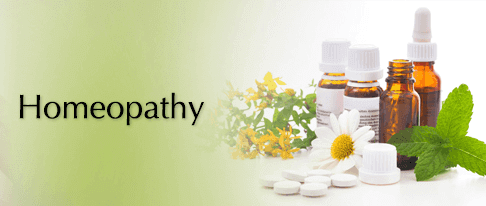
Homoeopathy is a system of medicine founded by the celebrated physician Dr. Samuel Hahnemann (1755-1843) of Germany. It is based on the principle that ‘like cures like’. In practice, this means that a medicine capable of producing certain effects when taken by a healthy human being is capable of curing any illness that displays similar effects.
The medicines of Homoeopathy
Like Cure Likes
For example, if a healthy person takes a dose of Arsenic, he will develop vomiting, diarrhea of rice-water stools, a rapid pulse, and prostration. His skin will become cold and his expression anxious. In smaller doses or when taken for a longer time, he will develop a running nose, heavy head, cough, and bronchial catarrh. Even later there will be specific disturbances of skin and nerves. He will develop a burning sensation all over which is relieved by warmth, frequent thirst for sips of water, fear of death, restlessness, and a worsening of symptoms at noon and midnight.
According to Homoeopathic law ‘like cures like’, countless patients displaying such symptoms have been cured by the homeopathic remedy Arsenicum album, irrespective of the name of the disease (cholera, colds, eczema, asthma, etc.).
Hippocrates postulated this principle in the words, “Similia Similibus Curentur” (‘likes are cured by likes).
The practice of homeopathy is based on certain fundamental principles. Firstly, the remedies that are used are tested on human volunteers (provers) to elicit the symptoms they can produce. The symptoms of each remedy experienced by the provers are recorded in exact detail and they form the Homoeopathic Materia Medica. The symptoms of the patient are then matched with the symptoms of the various remedies in the Materia Medica to find out a single remedy whose symptoms are most similar to those of the patient (like cures like).
 Dr Riffat Nawab Musab